Local Business SEO Checklist for Improved Visibility
Local Business SEO Checklist for Improved Visibility

Local business owners fret over getting found online and for good reason. Nearly 46 percent of all Google searches are looking for local information. Most entrepreneurs assume a simple website or a few directory listings will do the trick. The real difference, though, comes from a detailed local SEO strategy that most businesses ignore—meaning you can get discovered while your competition stays invisible.
Table of Contents
Quick Summary
| Key Point | Explanation |
|---|---|
| 1. Assess Your Online Position | Start with an audit of your Google Business Profile and online listings to identify inconsistencies. |
| 2. Optimize Google Business Profile | Ensure accurate information and add high-quality visuals to engage customers effectively. |
| 3. Implement On-page SEO Best Practices | Use clear, location-specific titles and meta descriptions to improve search visibility and user experience. |
| 4. Build Local Citations and Backlinks | Target authoritative local directories and collaborate with relevant businesses to enhance credibility online. |
| 5. Monitor and Adjust SEO Strategies | Regularly check performance metrics and adjust strategies based on analytical insights for continuous improvement. |
Step 1: Assess Your Current Online Position
Before diving into any local business SEO strategy, you need a clear snapshot of your current digital landscape. Think of this as taking inventory of your online assets and understanding exactly where your business stands in the digital marketplace.
Starting your local business SEO checklist begins with comprehensive digital detective work. Pull out your laptop and prepare to conduct a thorough investigation of your online presence. You’ll want to start by searching your business name on Google and examining what potential customers see when they look for your services.
Mapping Your Current Digital Footprint
First, check your Google Business Profile. This is your digital storefront and often the first impression customers get. Verify that all information is accurate: business name, address, phone number, operating hours, and service descriptions. Even small discrepancies can confuse potential customers and hurt your local search rankings.
Next, run a quick audit of your current online listings. Search across platforms like Yelp, Yellow Pages, and industry-specific directories. Look for these critical verification points:
- Consistent business name spelling
- Accurate contact information
- Matching address and phone number
- Up-to-date business categories
- Current operating hours
Mismatched or outdated information across platforms signals to search engines that your business might not be reliable. Google values consistency, so treat these listings like a precision instrument that needs constant calibration.
Below is a checklist table summarizing the essential verification points to ensure your business listings are consistent across all online directories.
| Verification Point | What to Check | Why It Matters |
|---|---|---|
| Business Name Spelling | Exact and consistent across sites | Avoids confusion and boosts reliability |
| Contact Information | Correct phone and email | Ensures customers can reach you |
| Address | Matches location details everywhere | Improves trust with search engines |
| Business Categories | Up-to-date and relevant categories | Helps search engines classify your business |
| Operating Hours | Accurate and current hours listed | Prevents customer frustration |
Technical Performance Check
Beyond listings, assess your website’s technical health. Use free tools like Google PageSpeed Insights to evaluate loading speed and mobile responsiveness. Local businesses often overlook these technical aspects, but they significantly impact search rankings and user experience.
Your goal in this first step is simple: create a comprehensive baseline of your current online position. By meticulously documenting your digital presence, you’re setting the foundation for targeted, effective local SEO improvements. Each detail you uncover becomes a strategic point for future optimization.
Remember, this isn’t about perfection—it’s about understanding your starting point. The more clearly you see your current digital landscape, the more precisely you can chart your path to improved online visibility.
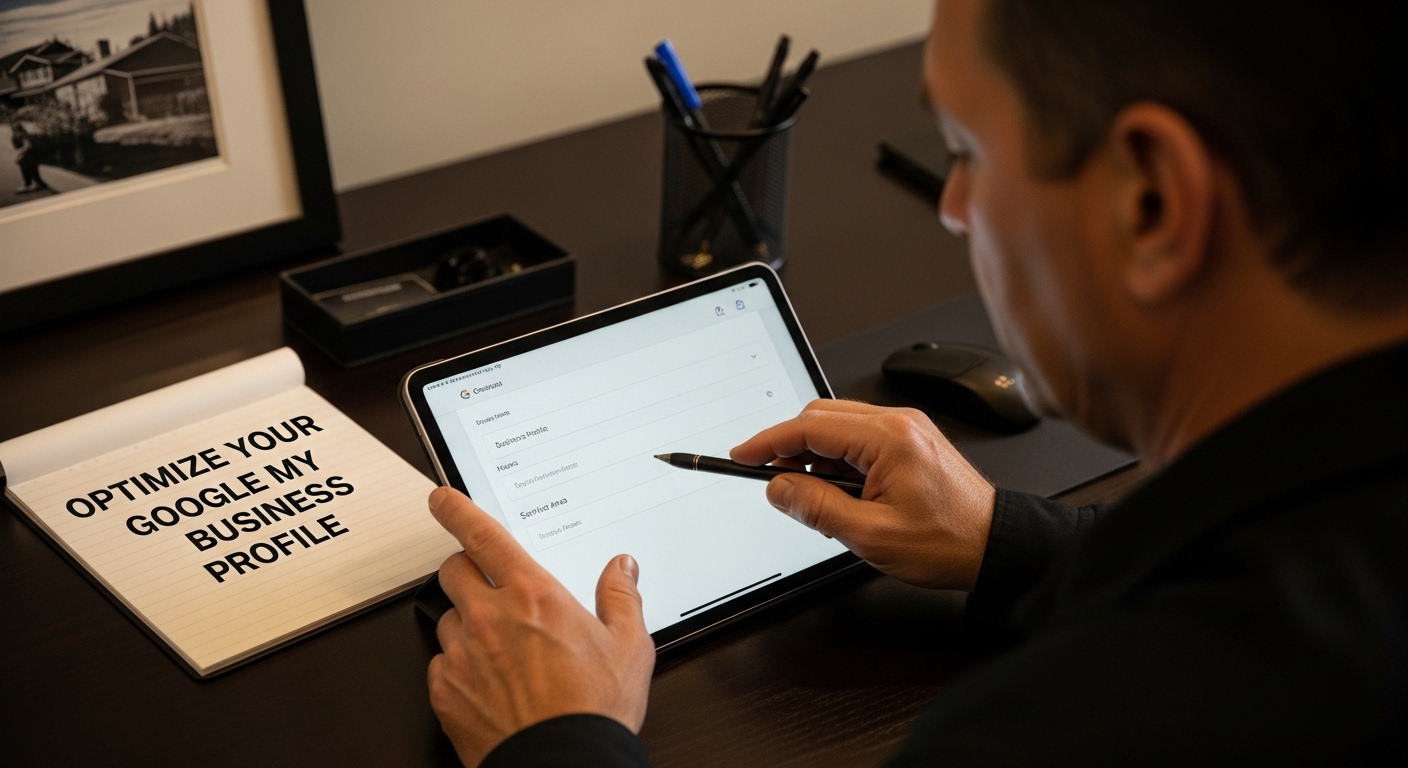
Step 2: Optimize Your Google My Business Profile
Your Google Business Profile is like the digital front door of your local business. It’s not just a listing—it’s your primary opportunity to make a killer first impression on potential customers searching for services in your area.
To start, log into your Google Business Profile and prepare for a comprehensive makeover. Treat this profile like your most important marketing real estate. Every detail matters, from your business description to the images you choose.
Crafting a Standout Business Profile
Begin by ensuring absolute accuracy in your basic information. Your business name, address, and phone number must match exactly across all online platforms. Inconsistent information confuses both customers and search algorithms, potentially tanking your local search rankings.
Photos are your secret weapon. Upload high-quality, professional images that showcase your business environment, team, and services. Aim for a mix of interior shots, exterior views, team photos, and action images that demonstrate what you actually do. Google rewards profiles with robust visual content, and customers are more likely to engage with businesses that look genuine and approachable.
Write a compelling business description that speaks directly to your target audience. Avoid generic corporate speak. Instead, explain what makes your business unique. Are you the most experienced contractor in Helena? Do you offer something your competitors don’t? Highlight those differentiators in clear, straightforward language.
Strategic GBP Optimization
The next critical step is selecting the right business categories and services. Be specific and precise. If you’re a roofing contractor, don’t just list yourself as a general contractor. Choose categories like “Roofing Contractor” or “Roof Repair Service” that precisely match your expertise.
Encourage customer reviews—they’re gold for local SEO. Create a simple process for satisfied customers to leave feedback. You might send a follow-up email after service completion with a direct link to your Google review page. Respond to every review, both positive and negative, showing potential customers that you’re engaged and care about client experiences.
Verify that your service area is correctly defined. For local businesses, this means clearly marking the geographic regions you serve. If you primarily work in Helena and surrounding Montana areas, make that explicit in your profile settings.
As a final check, use the preview function to see exactly how your profile appears to potential customers. Would you click on your own listing? Does it look professional, inviting, and informative? Your goal is to transform your Google Business Profile from a basic listing into a powerful marketing tool that converts searches into customers.
Step 3: Implement On-page SEO Best Practices
On-page SEO transforms your website from a digital brochure into a powerful lead generation machine. This step is about making your website communicate clearly with both search engines and potential customers, ensuring every page works hard to attract and convert local business leads.
Start by opening your website and preparing to conduct a comprehensive content audit. Your goal is to create a website that speaks directly to local customers while meeting search engine optimization standards.
Optimizing Website Content and Structure
Your page titles and meta descriptions are your digital billboards. Craft compelling, location-specific titles that include your primary service and geographic area. For a roofing contractor in Helena, a title like “Helena Professional Roofing Services | Expert Roof Repair” immediately tells search engines and customers exactly what you offer and where.
Write meta descriptions that act like mini-advertisements. These short paragraphs should highlight your unique value proposition, include a local keyword, and create a sense of urgency. Think about what makes a potential customer click: reliability, expertise, quick service, or competitive pricing.
Header tags are not just formatting—they’re critical SEO signals. Structure your content using H1, H2, and H3 tags that incorporate local keywords naturally. Break up text into readable chunks that guide readers through your services, expertise, and value proposition.
Technical SEO Refinements
Website speed and mobile responsiveness are non-negotiable. Google punishes slow websites, especially for local searches. Use tools like Google PageSpeed Insights to analyze and improve your site’s performance. Compress images, minimize code, and ensure your website loads quickly on both desktop and mobile devices.
Implement strategic internal linking throughout your website. Connect related service pages, create a logical site structure, and help visitors (and search engines) navigate your content easily. For instance, link your roofing repair page to your general contracting services page, creating a web of relevant, interconnected content.
Ensure your website includes clear, prominent calls-to-action. Local customers want immediate, frictionless ways to contact you . Add click-to-call buttons, contact forms, and location information that’s visible on every page. Make it brain-dead simple for a potential customer to reach out.
Finally, verify your optimization efforts. Use Google Search Console to check indexing, monitor search performance, and identify any technical issues. Your website should feel like a well-oiled machine that attracts, informs, and converts local customers with minimal effort.
Step 4: Build Local Citations and Backlinks
Local citations and backlinks are the digital equivalent of word-of-mouth recommendations. They’re powerful signals that tell search engines your business is credible, relevant, and trusted within your local community. Think of them as digital votes of confidence that can dramatically boost your local search rankings.
Building these citations requires a strategic, systematic approach. You’re not just throwing your business information around the internet—you’re carefully crafting a network of authoritative references that validate your business’s reputation.
Targeting Relevant Local Directories
Start by identifying high-quality local directories specific to Helena and Montana. These aren’t just generic listing sites, but platforms that matter in your local business ecosystem. Chamber of Commerce websites, local business associations, and industry-specific directories become your primary targets.
Ensure your business information is absolutely consistent across all platforms. Your business name, address, phone number, and website must match exactly. Even minor variations can confuse search engines and potentially harm your local search rankings. This consistency is your foundation for building trust with both search algorithms and potential customers.
Hunt for industry-specific directories that cater to your specific service. For a roofing contractor, this might include construction trade websites, home improvement platforms, and local contractor associations. Each of these citations acts like a digital signpost pointing potential customers toward your business.
Strategic Backlink Acquisition
Backlinks require a more nuanced approach. You’re not buying links or using spammy tactics—you’re building genuine relationships within your local business community. Reach out to complementary businesses for potential cross-promotion. A roofing contractor might partner with local real estate agents, home inspectors, or construction companies who could link to your website.
Create link-worthy content that provides genuine value. Write blog posts about local home maintenance, share insights about seasonal roofing challenges in Montana, or provide educational resources that other local websites would want to reference. The more useful your content, the more likely other sites are to link to you naturally.
Consider sponsoring local events, participating in community initiatives, or contributing to local publications. These activities often come with website mentions or backlinks that not only improve your SEO but also enhance your community reputation.
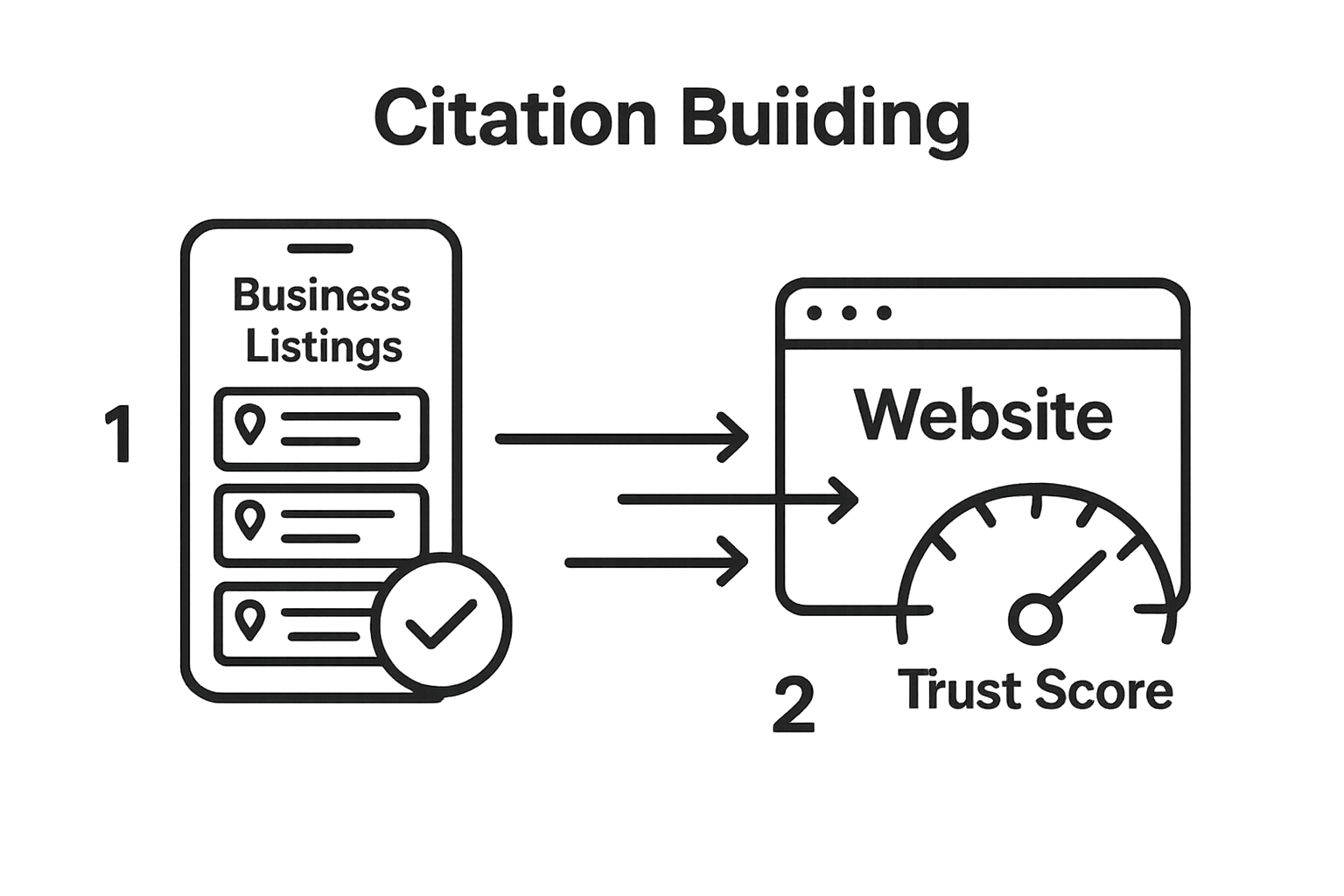
To verify your progress, use tools like Google Search Console to track your backlink profile. Look for increasing domain authority, growing numbers of quality citations, and improvements in local search rankings. Remember, building citations and backlinks is a marathon, not a sprint—consistent, quality efforts will yield the best results over time.
Step 5: Monitor and Adjust Your SEO Strategy
SEO isn’t a set-it-and-forget-it process. It’s more like tending a garden—requiring constant attention, periodic pruning, and strategic adjustments. Your local business SEO strategy needs regular check-ups to ensure it continues delivering results in an ever-changing digital landscape.
Think of monitoring as your digital health check. You’re not just looking for problems, but seeking opportunities to improve and grow your online presence. The goal is to stay agile, responsive, and consistently visible to potential local customers.
Performance Tracking and Analysis
Google Search Console becomes your most important dashboard. This free tool offers incredible insights into how search engines view your website. Pay close attention to key metrics like search impressions, click-through rates, and average position for your most important keywords. When you see a dip in performance, it’s not a failure—it’s an invitation to investigate and improve.
Set up monthly review sessions where you dive deep into your analytics. Look beyond surface-level numbers and understand the story they’re telling. Are customers finding you through the keywords you expected? Are there unexpected search terms driving traffic to your site? These insights can help you refine your content and targeting strategy.
Tracking local search rankings requires a nuanced approach. Use tools that allow you to monitor your position for location-specific searches. For a Helena-based business, this means tracking how you rank when someone searches “roofing contractor near me” or “Helena roof repair”.
Strategic Refinement and Adaptation
When you notice performance trends, don’t just observe—take action. If certain pages aren’t performing well, consider refreshing their content, improving their structure, or creating more targeted, locally-focused material. Your website should be a living document that evolves with your business and community needs.
Pay special attention to seasonal variations in search behavior. A roofing contractor might see different search patterns during Montana’s harsh winter months compared to summer. Adjust your content and keywords to match these seasonal shifts, ensuring you’re always speaking directly to current customer needs.
Consider setting up automated monthly reports that give you a quick snapshot of your SEO performance. These reports should highlight:
- Changes in search rankings
- New backlink acquisitions
- Website traffic trends
- Conversion rate shifts
Remember, SEO is a marathon, not a sprint. Small, consistent improvements compound over time. By dedicating time each month to monitoring and adjusting your strategy, you’re investing in long-term online visibility and business growth.
The following table summarizes key tools and resources mentioned for monitoring and optimizing your local SEO performance.
| Tool/Resource | Primary Purpose | How It Helps |
|---|---|---|
| Google Search Console | Track website performance and issues | Monitors indexing, search rankings, and technical health |
| Google Business Profile | Manage business information on Google | Engages customers, tracks profile views, and collects reviews |
| Google PageSpeed Insights | Assess website speed and responsiveness | Identifies loading speed and mobile usability issues |
| Local Search Rank Tracker | Tracks rankings for specific locations | Monitors search performance in target areas |
| Automated Reports | Receive regular performance snapshots | Keeps you updated on trends and improvements |
Take Control of Your Local SEO Journey
Struggling to manage every detail in your local business SEO checklist? Many Helena business owners know how easy it is to feel overwhelmed when trying to optimize Google Business Profiles, nail technical SEO, and build high-quality local backlinks. Even small inconsistencies in your listings or website structure can make you lose out on valuable leads and local rankings. Make sure your efforts do not go unnoticed. Our team specializes in strategies like Link Building, directory optimization, and on-page refinement, so you do not have to worry about missing any critical steps.
Do not let DIY challenges or wasted hours slow your growth. Let Helena SEO Pros put your business in front of more local customers. Ready to see measurable lifts in traffic, rankings, and calls? Book your expert consultation today and experience what focused, results-driven local SEO can accomplish for you.
Frequently Asked Questions
How can I assess my current online position for local SEO?
To assess your current online position for local SEO, start by checking your Google Business Profile for accuracy in contact details and operational hours. Conduct an audit across various online directories like Yelp and Yellow Pages for consistent business information. It’s also important to review your website’s technical performance, including loading speed and mobile responsiveness, using tools like Google PageSpeed Insights.
What are the key elements to optimize in my Google Business Profile?
Key elements to optimize in your Google Business Profile include ensuring absolute accuracy of your business name, address, and phone number. Enhance your profile by uploading high-quality images, providing a compelling business description, and selecting specific categories and services that reflect your business. Encourage customer reviews and respond to them to engage potential customers.
What on-page SEO best practices should I implement for my website?
On-page SEO best practices include optimizing your page titles and meta descriptions with location-specific keywords, structuring your content with header tags (H1, H2, H3), and ensuring your site is mobile-responsive and fast-loading. Use internal linking to guide visitors through your services and include clear calls-to-action to facilitate contact with potential customers.
How do local citations and backlinks influence my local SEO?
Local citations and backlinks serve as digital endorsements, signaling to search engines that your business is credible and relevant in your community. Building consistent citations across local directories and acquiring backlinks through genuine relationships with complementary businesses or quality content can significantly boost your local search rankings and visibility.
Recommended