What is Digital Advertising? Understanding Its Impact
What is Digital Advertising? Understanding Its Impact

Digital advertising is changing how businesses talk to their customers and the difference is huge. Forget pricey TV spots and billboards. Some small businesses now save almost $163 billion every year with online ads , which they can put right back into growth. Most people think digital ads are just annoying pop-ups but the real surprise is how precisely these ads reach exactly the people who are ready to buy. This shift is opening doors for even the smallest companies to stand toe to toe with the giants.
Table of Contents
Quick Summary
| Takeaway | Explanation |
|---|---|
| Digital advertising ensures precise audience targeting. | Businesses can reach specific customer segments using detailed demographic and behavioral data. |
| Real-time performance tracking enhances campaign effectiveness. | Advertisers can monitor metrics to optimize strategies instantly, improving return on investment. |
| Small businesses gain cost-effective marketing opportunities. | Digital advertising allows smaller firms to compete efficiently without requiring large budgets. |
| Integrated strategies amplify brand visibility. | Successful campaigns benefit from cohesive digital tactics, engaging customers across multiple platforms. |
| Data-driven insights lead to impactful messaging. | Thorough audience analysis enables marketers to create compelling content that resonates with consumers. |
Defining Digital Advertising: Key Elements and Types
Digital advertising represents a powerful marketing strategy that leverages online platforms and digital technologies to promote products, services, and brands to targeted audiences. Unlike traditional advertising methods, digital advertising offers unprecedented precision, measurability, and interactive capabilities.
Understanding Digital Advertising’s Core Components
At its fundamental level, digital advertising involves strategically placing promotional content across digital channels to reach potential customers. These channels include websites, social media platforms, search engines, mobile applications, and email networks. The primary objective is to connect businesses with their ideal audience through highly targeted and personalized communication .
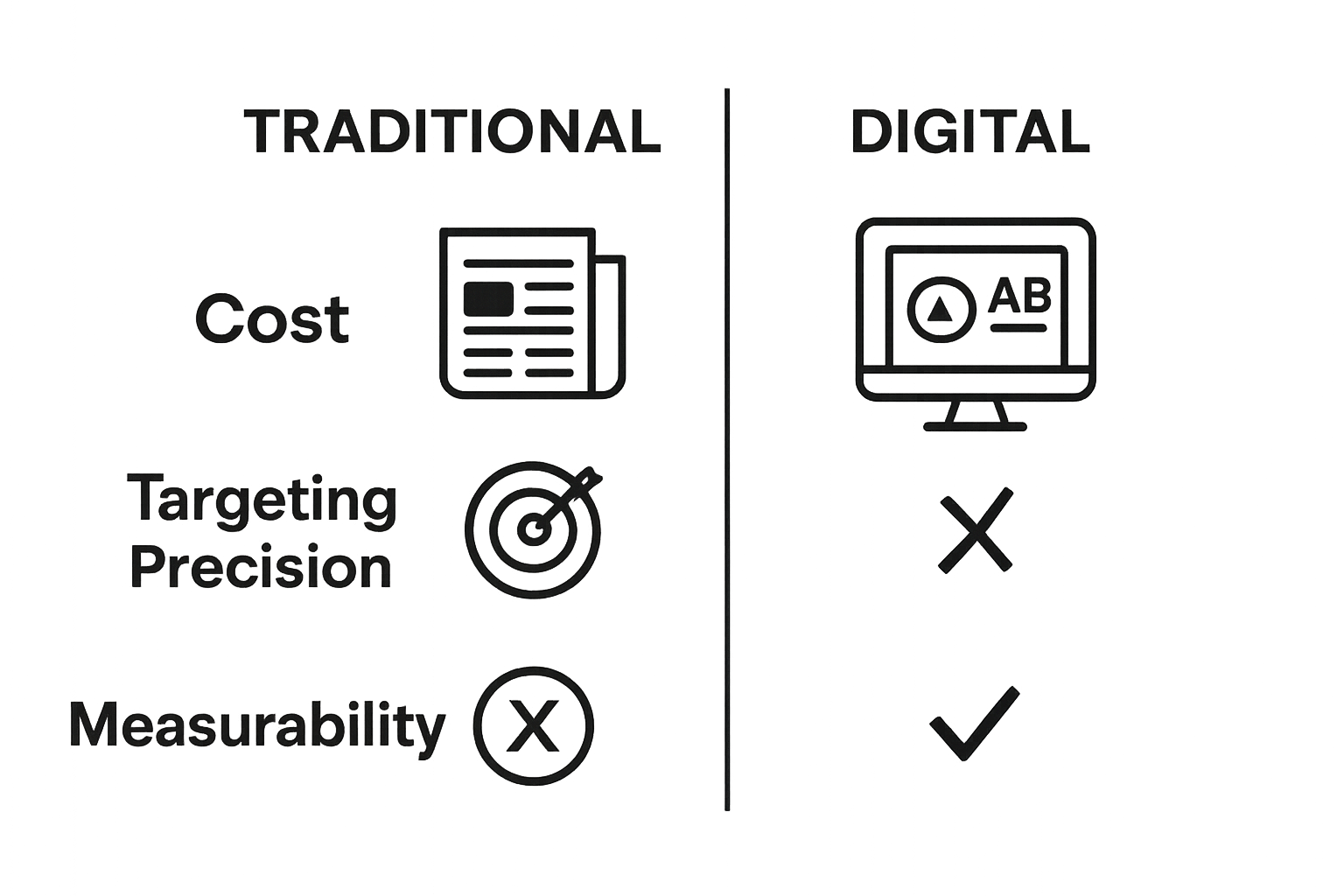
According to the Network Advertising Initiative, digital advertising enables free online content and services by providing businesses a mechanism to reach consumers through sophisticated targeting techniques. This approach allows advertisers to deliver messages precisely when and where potential customers are most likely to engage.
Types of Digital Advertising Strategies
Digital advertising encompasses several distinct strategies, each designed to achieve specific marketing objectives:
- Search Engine Advertising : Placing paid advertisements within search engine results
- Social Media Advertising : Promoting content across platforms like Facebook, Instagram, and LinkedIn
- Display Advertising : Using visual banner ads on websites and applications
- Video Advertising : Creating video content for platforms like YouTube and streaming services
- Email Marketing : Sending targeted promotional messages directly to subscriber inboxes
Targeting and Measurement Capabilities
What distinguishes digital advertising from traditional methods is its remarkable ability to track, analyze, and optimize campaign performance in real time. Advertisers can monitor metrics such as:
- Click-through rates
- Conversion percentages
- Audience demographics
- Engagement levels
- Return on investment
These sophisticated tracking mechanisms enable businesses to continuously refine their advertising strategies, ensuring maximum efficiency and effectiveness in reaching their target market. By leveraging data-driven insights, companies can create more compelling, relevant, and impactful digital advertising campaigns that resonate with their intended audience.
To help clarify the core kinds of digital advertising strategies described in the article, the following table outlines each type with a concise explanation and example use case.
| Advertising Type | Description | Example Use Case |
|---|---|---|
| Search Engine Advertising | Paid ads displayed alongside search engine results | A plumber bids on Google Ads to appear for local searches |
| Social Media Advertising | Promoting content on platforms like Facebook, Instagram | A local bakery targets cake ads to Instagram users nearby |
| Display Advertising | Visual banner ads on websites and applications | A travel agency runs banners on travel blogs |
| Video Advertising | Video-based promotions on platforms (e.g., YouTube) | An auto shop makes a video ad to run before YouTube clips |
| Email Marketing | Targeted messages delivered to subscriber inboxes | An online retailer sends monthly deals emails |
The Importance of Digital Advertising for Small Businesses
Small businesses face unique challenges in establishing brand visibility and competing against larger enterprises. Digital advertising provides a strategic solution that enables smaller organizations to effectively reach potential customers, maximize marketing budgets, and drive sustainable growth.
Leveling the Marketing Playing Field
Traditional advertising channels often require significant financial investments that exclude small businesses from competitive marketing strategies. Digital advertising fundamentally transforms this landscape by offering cost-effective and scalable promotional opportunities . Small businesses can now target specific audience segments with precision, regardless of their marketing budget.
According to the Small Business & Entrepreneurship Council, online advertising helps small businesses save nearly $163 billion annually, allowing them to reinvest resources directly into growth and expansion.
Strategic Benefits for Local Enterprises
Digital advertising offers multiple strategic advantages for small businesses:
- Targeted Reach : Pinpoint ideal customer demographics with unprecedented accuracy
- Measurable Results : Track campaign performance in real time
- Flexible Budgeting : Adjust spending based on immediate performance metrics
- Geographic Customization : Focus marketing efforts on local or regional markets
- 24/7 Visibility : Maintain constant online presence without additional personnel costs
Building Competitive Digital Presence
Successful digital advertising requires more than simply placing online advertisements. Small businesses must develop comprehensive strategies that integrate multiple digital channels, create compelling content, and continuously analyze performance data. This approach transforms digital advertising from a simple promotional tool into a sophisticated business growth mechanism.

By embracing digital advertising, small businesses can effectively communicate their unique value propositions, build brand recognition, and compete successfully in increasingly digital marketplaces. The key lies in understanding target audiences, crafting resonant messaging, and leveraging technological tools that amplify marketing effectiveness.
This table organizes the main targeting and measurement capabilities of digital advertising described in the article, offering a clear overview of how businesses can reach and track their audience with precision.
| Capability | Description | Example Metric |
|---|---|---|
| Audience Targeting | Reaching specific demographics and segments | Age, location, interests |
| Real-Time Analytics | Monitoring campaign performance instantly | Click-through rate (CTR) |
| Conversion Tracking | Measuring how many users complete desired actions | Conversion percentage |
| Engagement Measurement | Gauging interactions with ad content | Engagement levels |
| ROI Calculation | Assessing financial effectiveness of campaigns | Return on investment (ROI) |
How Digital Advertising Works: Channels and Strategies
Digital advertising operates through complex technological ecosystems that enable businesses to connect with potential customers across multiple online platforms. These sophisticated systems leverage data, algorithms, and advanced targeting mechanisms to deliver precise, personalized marketing messages.
The Technological Infrastructure of Digital Advertising
At its core, digital advertising functions through intricate data collection and analysis processes . Advertising platforms utilize advanced tracking technologies, including cookies, pixels, and user behavior analytics, to understand consumer preferences, browsing habits, and potential purchasing intentions. This data becomes the foundation for creating highly targeted advertising experiences.
According to research from the National Institutes of Health, digital communication strategies involve multiple complex components, including content development, credibility enhancement, and engagement optimization. These principles directly apply to digital advertising’s fundamental operational framework.
Key Digital Advertising Channels and Mechanisms
Digital advertising encompasses several primary channels, each with unique operational characteristics:
- Search Engine Advertising : Displaying targeted ads alongside search results
- Social Media Advertising : Promoting content within user feeds and targeted sections
- Display Network Advertising : Using visual banners across websites and applications
- Programmatic Advertising : Automated, real-time ad placement using algorithmic technologies
- Retargeting Campaigns : Reconnecting with users who previously interacted with a brand
Strategic Targeting and Performance Optimization
Successful digital advertising goes beyond simple message placement. Modern strategies involve continuous performance monitoring, audience segmentation, and rapid campaign adjustments. Advertisers use sophisticated analytics tools to track metrics such as click-through rates, conversion percentages, and return on investment.
By understanding user behaviors, preferences, and interactions, businesses can create increasingly refined advertising approaches. This iterative process transforms digital advertising from a static promotional method into a dynamic, responsive marketing mechanism that adapts in real time to audience engagement patterns.
Understanding Targeting and Analytics in Digital Advertising
Digital advertising has transformed marketing through sophisticated targeting mechanisms and comprehensive analytical tools that enable businesses to understand and engage potential customers with unprecedented precision. These technologies go far beyond traditional advertising approaches by providing deep insights into consumer behavior and campaign performance.
The Science of Audience Targeting
Targeting in digital advertising represents a complex, data-driven approach to identifying and reaching specific audience segments. Advertisers utilize multiple data points including demographic information, browsing history, purchasing behaviors, geographic location, and personal interests to create highly precise audience profiles. This granular approach allows businesses to deliver messages that resonate directly with individual consumer preferences.
According to research exploring computational advertising, modern targeting strategies involve intricate algorithms that analyze vast amounts of user data to predict potential engagement and conversion probabilities. These computational methods enable advertisers to move beyond broad demographic categories and focus on nuanced, individualized consumer characteristics.
Key Targeting and Analytical Dimensions
Digital advertising analytics encompass several critical dimensions:
- Demographic Targeting : Age, gender, income level, education
- Behavioral Targeting : Online browsing patterns, purchase history
- Contextual Targeting : Matching ads to relevant website content
- Geographical Targeting : Location-based advertising strategies
- Retargeting : Reconnecting with previous website visitors
Performance Measurement and Optimization
Advanced analytics provide businesses with real-time insights into advertising performance. Marketers can track multiple key performance indicators (KPIs) such as click-through rates, conversion rates, cost per acquisition, and return on ad spend. These metrics enable continuous campaign refinement, allowing businesses to adjust strategies dynamically based on actual user interactions.
By leveraging sophisticated targeting and analytical tools, businesses transform digital advertising from a passive promotional technique into an intelligent, responsive marketing ecosystem. The ability to understand, predict, and adapt to consumer behaviors represents the most significant advancement in modern advertising strategies.
Real-World Examples of Digital Advertising Success
Digital advertising has transformed how businesses communicate with potential customers, offering remarkable opportunities for growth and engagement across diverse industries. Successful campaigns demonstrate the power of strategic digital marketing approaches in driving measurable business outcomes.
Small Business Digital Advertising Triumphs
Local businesses have particularly benefited from targeted digital advertising strategies , leveraging sophisticated online marketing techniques to compete effectively with larger enterprises. These success stories illustrate how precise digital targeting can produce significant returns on relatively modest marketing investments.
According to the Connected Commerce Council, 57% of small business advertisers and publishers earn more than $50,000 annually from digital advertising, with 82% finding these methods more effective than traditional marketing approaches.
Successful Digital Advertising Case Studies
Multiple industries have demonstrated remarkable digital advertising achievements:
- Local Restaurant : Increased weekend reservations by 45% through targeted Facebook and Instagram ads
- Home Services Company : Generated 60% more customer inquiries using Google Search advertisements
- E-commerce Startup : Achieved 3x return on ad spend through precise audience retargeting
- Professional Services Firm : Reduced customer acquisition costs by 35% using LinkedIn professional targeting
- Retail Boutique : Expanded customer base by 25% through integrated social media advertising campaigns
Strategic Insights from Successful Campaigns
These real-world examples reveal critical digital advertising principles. Successful campaigns share common characteristics: precise audience understanding, compelling creative content, continuous performance monitoring, and willingness to adapt strategies based on data-driven insights.
By embracing digital advertising’s potential, businesses can transform their marketing approach from traditional broadcast methods to intelligent, responsive communication strategies. The key lies in understanding audience preferences, leveraging advanced targeting technologies, and maintaining flexibility in campaign execution.
Take the Next Step Toward Smarter Digital Advertising
Are you struggling to connect with the right customers online or worried that your local business is getting lost in a crowded digital world? The article highlighted how targeted digital advertising and smart analytics can transform your strategy and give you a real competitive edge. But without expert guidance and the right mix of SEO, web development, and local marketing, you could be missing the audience that matters most—right in Helena, Montana.
Now is the time to act. Let our team at Helena SEO Pros help you translate your learning into results. We combine the data-driven power of digital ads with cutting-edge web design, proven SEO strategies, and Google Maps optimization for real business growth. Imagine having customized campaigns that boost your visibility and deliver measurable results. Ready to see how tailored digital advertising can help you get ahead in your local market? Contact us for a free consultation and discover the difference a full-service, local-first agency can make today.
Frequently Asked Questions
What is digital advertising and how does it work?
Digital advertising refers to marketing strategies that utilize online platforms and digital technologies to promote products, services, and brands to targeted audiences. It operates through various channels like search engines, social media, and websites, using data-driven insights to reach consumers effectively.
What are the main types of digital advertising strategies?
The primary types of digital advertising strategies include search engine advertising, social media advertising, display advertising, video advertising, and email marketing, each designed to achieve specific marketing objectives.
Why is digital advertising important for small businesses?
Digital advertising is crucial for small businesses as it provides cost-effective and scalable promotional opportunities, enabling them to reach specific audience segments with precision and compete effectively against larger companies.
How can businesses measure the effectiveness of their digital advertising campaigns?
Businesses can measure the effectiveness of their digital advertising campaigns by tracking key performance indicators (KPIs) such as click-through rates, conversion rates, audience demographics, and return on investment in real-time, allowing for ongoing optimization of their strategies.
Recommended